Manual Gearbox: why do we still want it? | CarDynamics
Cars·News·Insights
Manual Gearbox: why do we still want it?
It’s no faster. It’s no more efficient. In traffic, it’s actually worse. And yet, it does something that even the most sophisticated automatic gearbox cannot do in quite the same way
Lorenzo Pollini· September 24, 2026
1 / 5
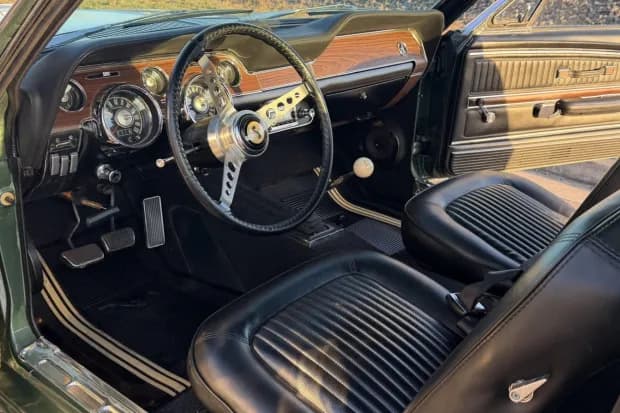
In Bullitt, that gear lever was an extension of Steve McQueen behind the wheel of his Mustang GT; a sensual, feline dance through the streets of San Francisco, with a Dodge Charger R/T glued to its exhausts. Gear changes came one after another, without anyone imagining that, a few decades later, driving that way would become almost a luxury.
Back then, that was simply how you drove. There were no alternatives to choose from, nor any debate about its future: the lever was there, in the middle of the cabin, and you had to use it. Some abused it, some mastered it, and some simply learned to live with it. But it was part of the car.
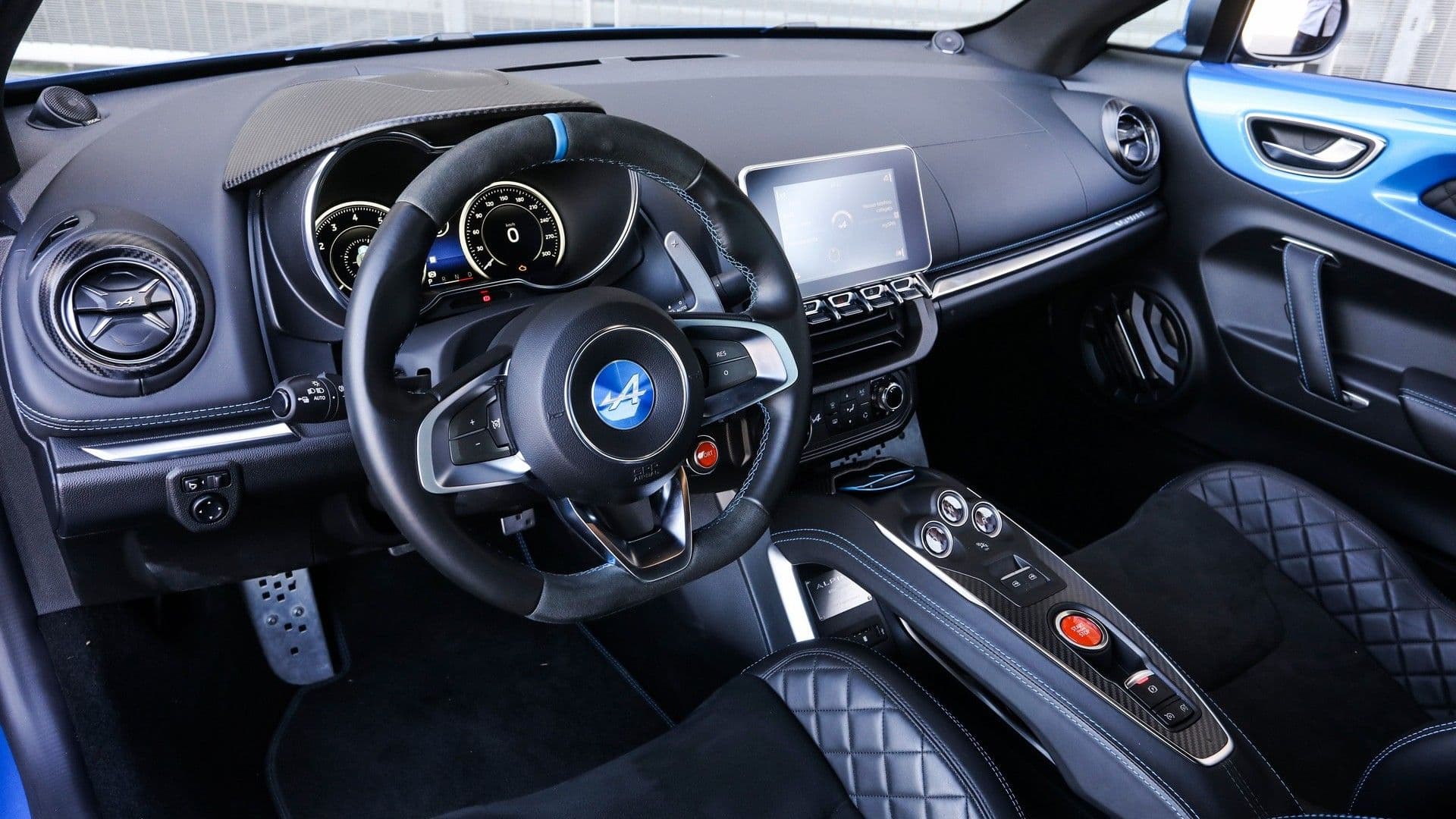
Then the car started doing everything by itself. The automatic gearbox was not invented to take something away from the driver, but to make the car easier to drive. Over time, it also became a tool for efficiency and electronic integration, evolving alongside an industry that had meanwhile become infinitely more complex.
Electrification has made it even harder to find a role for the manual gearbox. In modern hybrid powertrains, the combustion engine, electric motor, battery and transmission work together as parts of a single system. The gearbox no longer has to simply select the right ratio; it has to integrate with the strategies managing torque, consumption and power delivery. And then there is the least romantic issue of all: CO₂.
A modern automatic can manage gear selection and engine speed with a level of precision that is difficult for the average driver to replicate. It is not necessarily the principle of the automatic gearbox that makes it more efficient; rather, it is the
evolution of modern transmissions
that has made it possible to continuously optimise both gearing and engine speed.
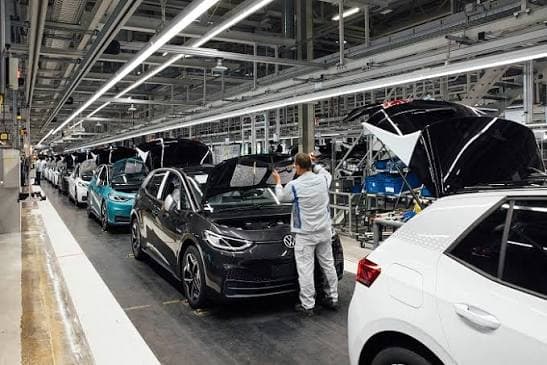
Then there is economies of scale. Offering two transmissions for the same model means maintaining different architectures, processes and supply chains. In a market increasingly geared towards standardisation, eliminating one option can simplify production and increase volumes for the other.
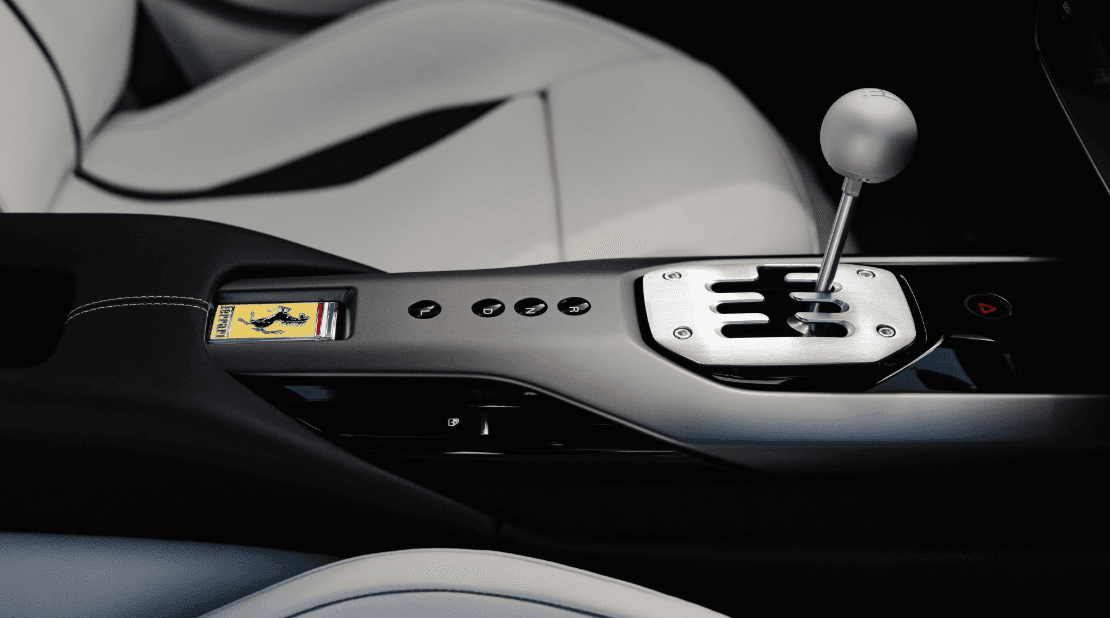
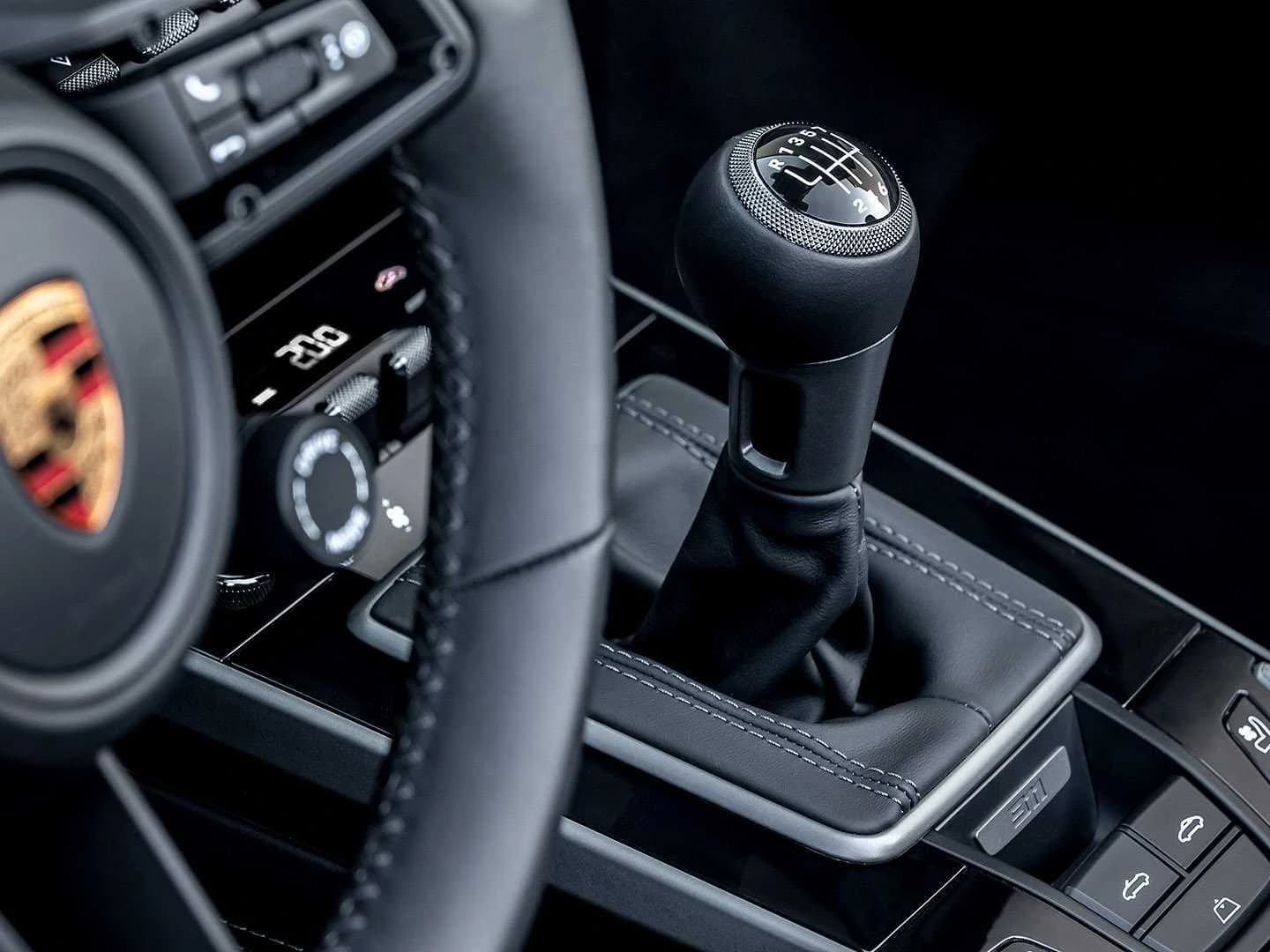
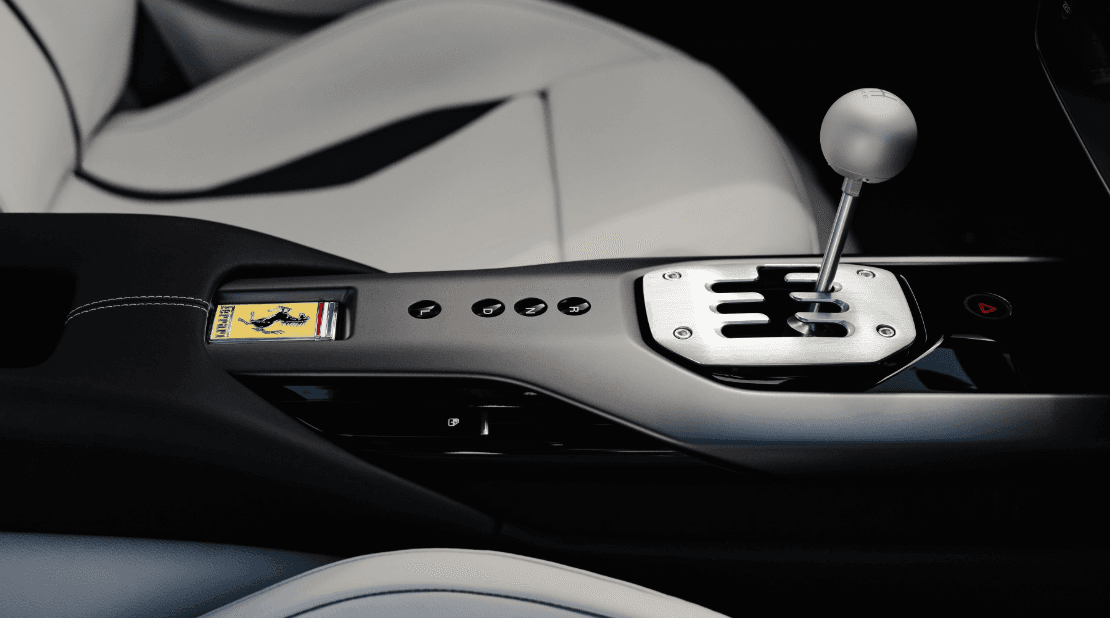
And yet, in 2026, the manual gearbox is far from dead. It is still available in a wide range of cars, from small hatchbacks and compact SUVs to sports cars: Dacia Sandero, Volkswagen Golf, Mazda MX-5, Ford Mustang, Toyota GR Yaris, BMW M3 and Porsche 911 are just a few examples. And then there is Ferrari, whose 12Cilindri Manuale brings back that old-fashioned lever – with a few tricks of its own – after almost twenty years without a manual at the Prancing Horse.
The difference is that today, the manual is no longer the obvious choice. It has become a deliberate choice.
And it is above all in cars designed around the pleasure of driving that some manufacturers continue – thankfully – to defend it. It is a rather curious paradox when you think about it: we have spent decades developing gearboxes that are increasingly intelligent, fast and sophisticated, yet there are still people – myself included – who would happily give up something in terms of shift speed just to be the one deciding when to change gear.
Why? Probably because pleasure is not always synonymous with efficiency.
What makes the manual special is not simply the ability to choose the gear, but the fact that the driver has to physically perform the entire sequence of the shift. A dance between the gear lever, clutch and accelerator, and, for the more skilful among us, perhaps a little heel-and-toe. It requires coordination, sensitivity and, sometimes, the ability to get it wrong. A badly executed downshift is your fault. So is a perfect one.
It is no faster. It is no more efficient. In traffic, it is actually worse. And yet, it does something that even an automatic with paddles, however sophisticated and lightning-fast, cannot completely replicate in quite the same way: it can stir your emotions.
Someone might object by pointing to, for example, the Civic Type R and its automatic rev-matching, which electronically adjusts engine speed on downshifts, effectively replicating heel-and-toe. Fair enough. But it would be like checking the time on your phone instead of, say, wearing a mechanical watch: the information is ultimately the same, yes, but the experience, at least for me, is completely different.
That is why the manual gearbox is becoming something remarkably similar to vinyl: an outdated technology that survives precisely because it is no longer necessary. Vinyl is not better than streaming, just as a manual gearbox is not better than a modern automatic. But both possess an emotional appeal and ask something more from the person using them.
 1 / 5