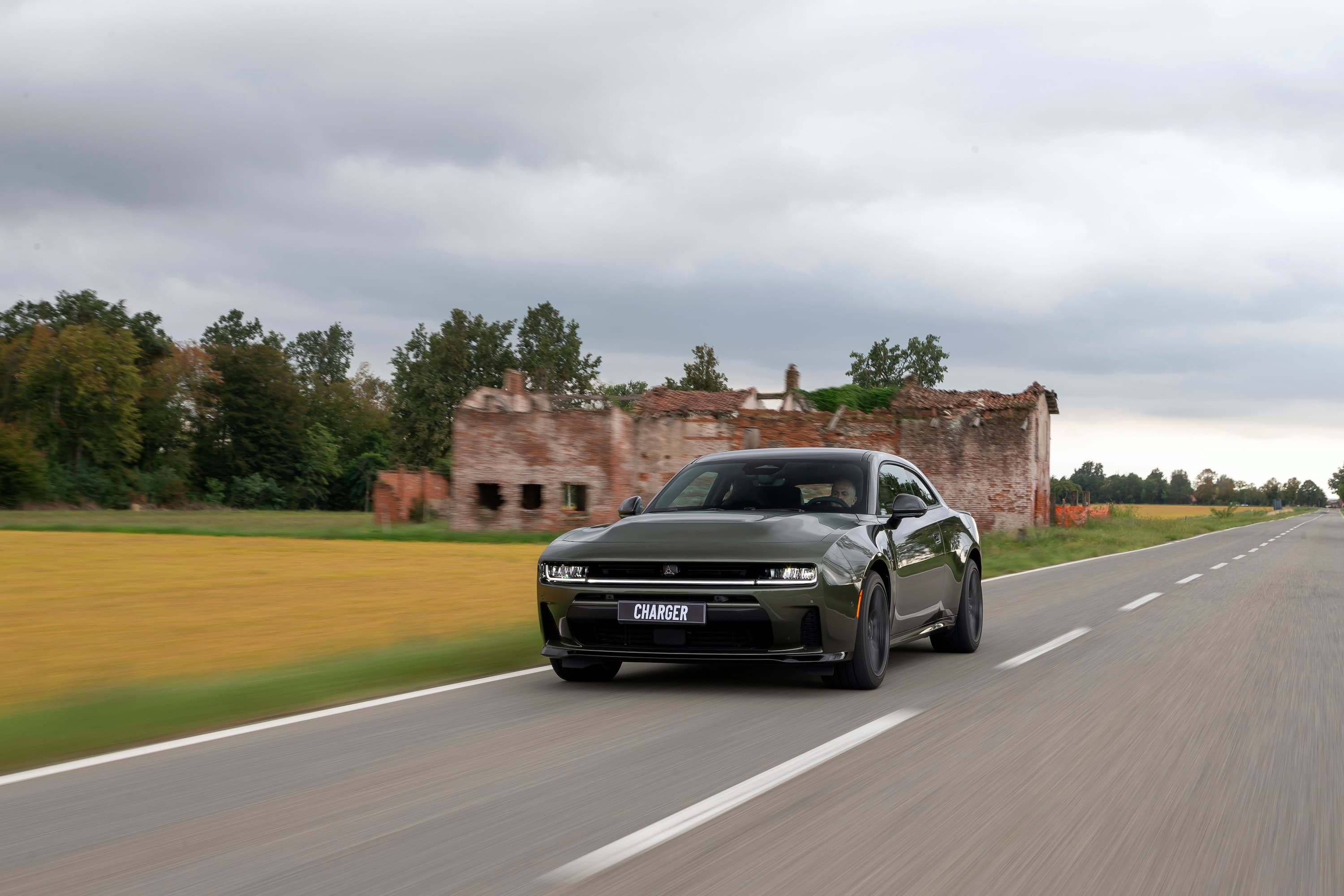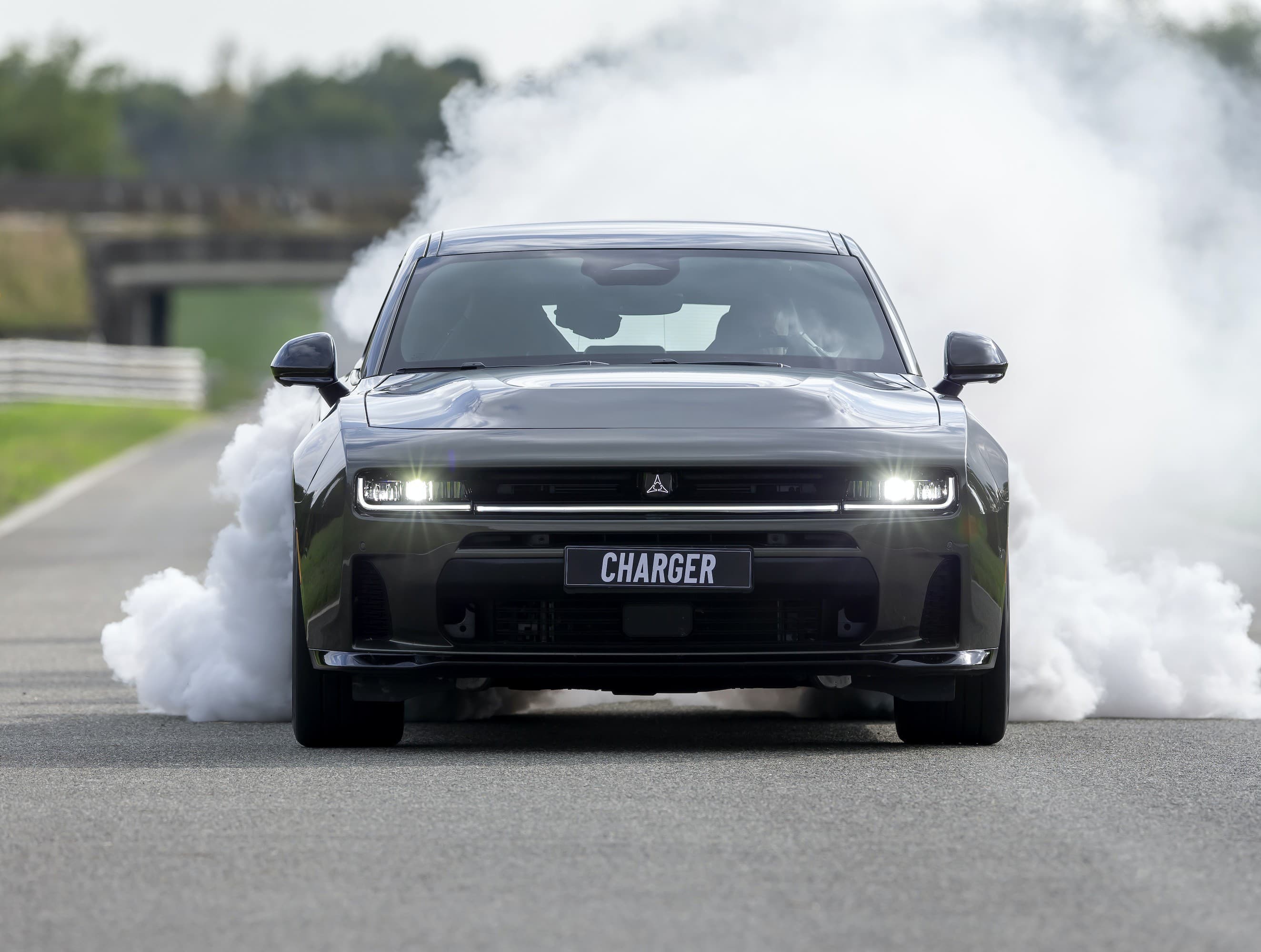
It’s an almost counterintuitive approach: rather than deciding what the future of the muscle car should be, Dodge is offering two. Red pill. Blue pill
Lorenzo Pollini· September 18, 2026
1 / 8Sixty years of history, an embarrassing amount of horsepower and one apparently rather serious problem: the world has changed. The Dodge Charger, however, has decided to deal with it in its own way.
Born in 1966, right in the middle of the golden age of American muscle cars, the Charger became much more than just a car. Fastback silhouette, muscular proportions, V8 engines and a cabin designed around the driver: generation after generation, these ingredients turned the name into a genuine institution of American car culture.
Then came films, TV series, motorsport and, naturally, a frankly impressive number of rear tyres sacrificed at the altar of speed. From Bullitt to Fast & Furious, via the racetrack and the world of competition, the Charger eventually became a recognisable symbol even to people who couldn’t tell a differential from a toaster – I know a few.
Now, on its 60th anniversary, Dodge has decided to do something considerably less nostalgic: move it forward.
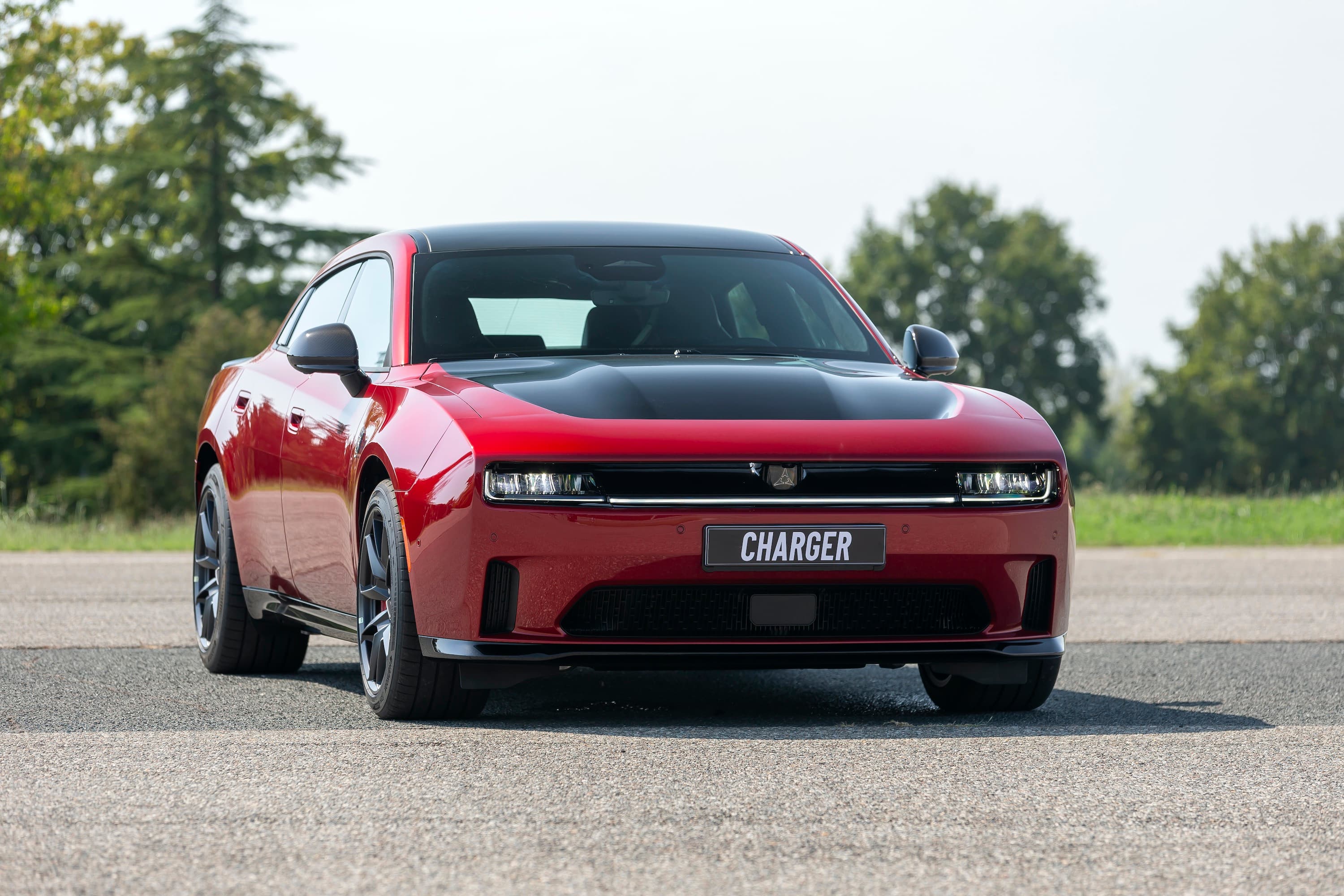
The new Charger arrives in Europe with a philosophy that comes in several shades, offering two interpretations of the same concept. On one side, there is the fully electric Daytona; on the other, the SIXPACK with an internal-combustion engine
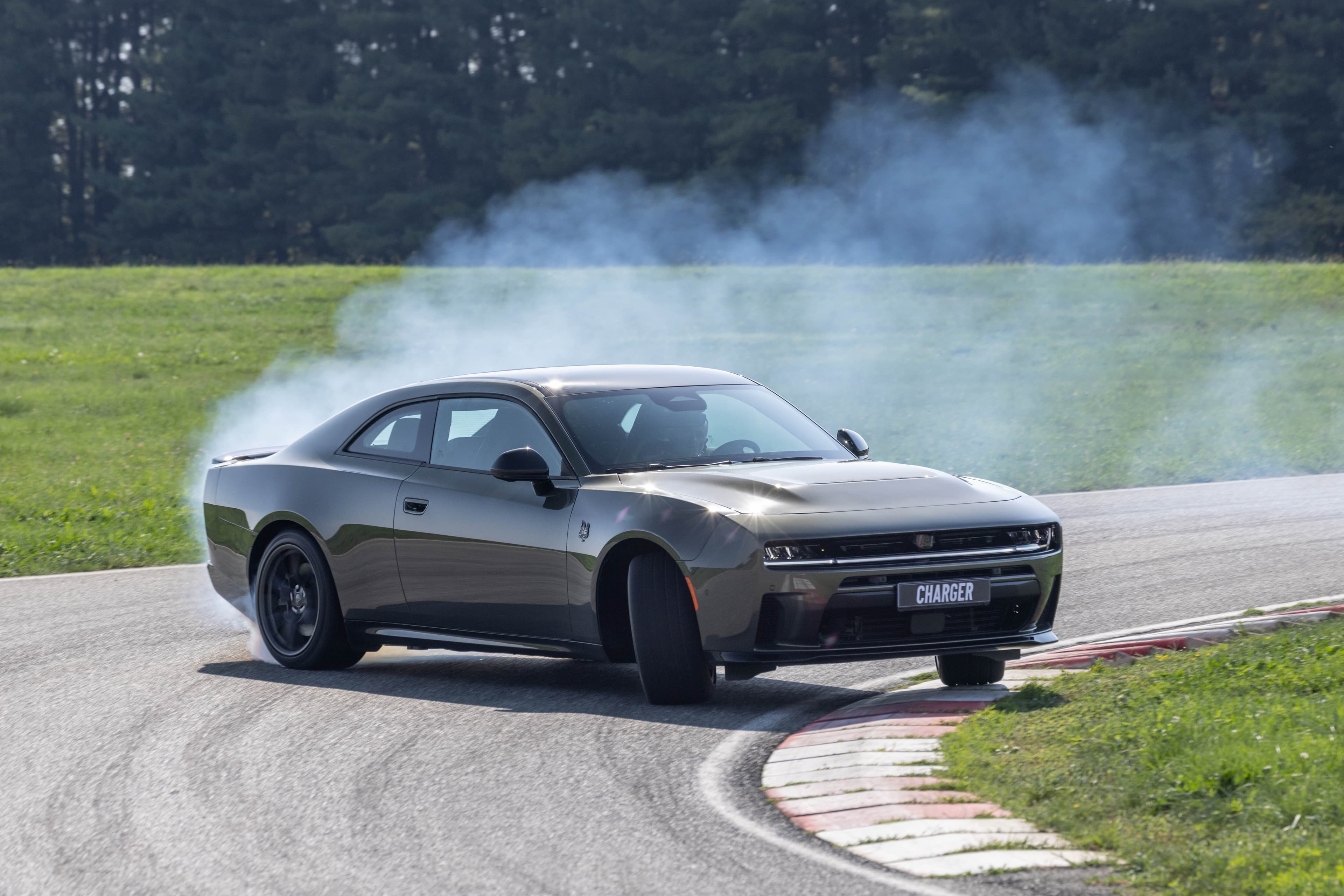
And while the idea of an electric Charger may sound like sacrilege to anyone raised on bread and HEMI, Dodge has at least avoided turning the petrol version into a mere cameo.
Under the bonnet of the Charger SIXPACK Scat Pack sits a 3.0-litre twin-turbocharged straight-six producing 550 hp and 720 Nm. Put those figures next to the old Charger Scat Pack with its 6.4-litre HEMI V8, producing 485 hp and 644 Nm, and an interesting story begins to emerge: downsizing does not necessarily mean surrendering – although there is, of course, that small and rather long-standing issue of the soundtrack...
There is more to it, too. The Charger SIXPACK features all-wheel drive, but can send 100% of its torque to the rear wheels – one of the best ways to make a Dodge turn. Then there is Line Lock, Launch Control, dedicated driving modes and an active exhaust system. Because the energy transition may well be inevitable, but apparently someone in Detroit decided that fun should not be thrown in the bin along with it.

Then there is the electric Daytona. Here, the numbers become almost surreal: the Scat Pack produces 670 hp, accelerates from 0 to 100 km/h in 3.3 seconds and completes the quarter mile in 11.5 seconds. Dodge has even developed the Fratzonic Chambered Exhaust, a system designed to give electric driving a sonic dimension closer to what you might expect from a muscle car. It is a bit like ordering a carbonara and discovering that the pancetta has been replaced with tofu: technically, it can be done, but convincing yourself that it is the same thing requires a certain amount of imagination – and courage.
The mechanical side is interesting, too, with the new Charger featuring multi-link front suspension, an Integral Link rear suspension, dual-valve adaptive dampers and, on the Daytona Scat Pack, Brembo brakes with 16-inch front discs and six-piston callipers.
Perhaps the most interesting aspect is the way Dodge is trying to keep an idea born sixty years ago alive while everything around it changes. The Charger is not returning to Europe simply as an old icon dragged back from the grave to live off nostalgia and make us shed a sentimental tear. It is returning with a design that retains the wide, aggressive proportions that made it famous, but combines them with a modern platform and two different interpretations of performance, allowing it to keep pace with the times.
It is an almost counterintuitive approach: rather than deciding what the future of the muscle car should be, Dodge is offering two versions of it.
Red pill. Blue pill.