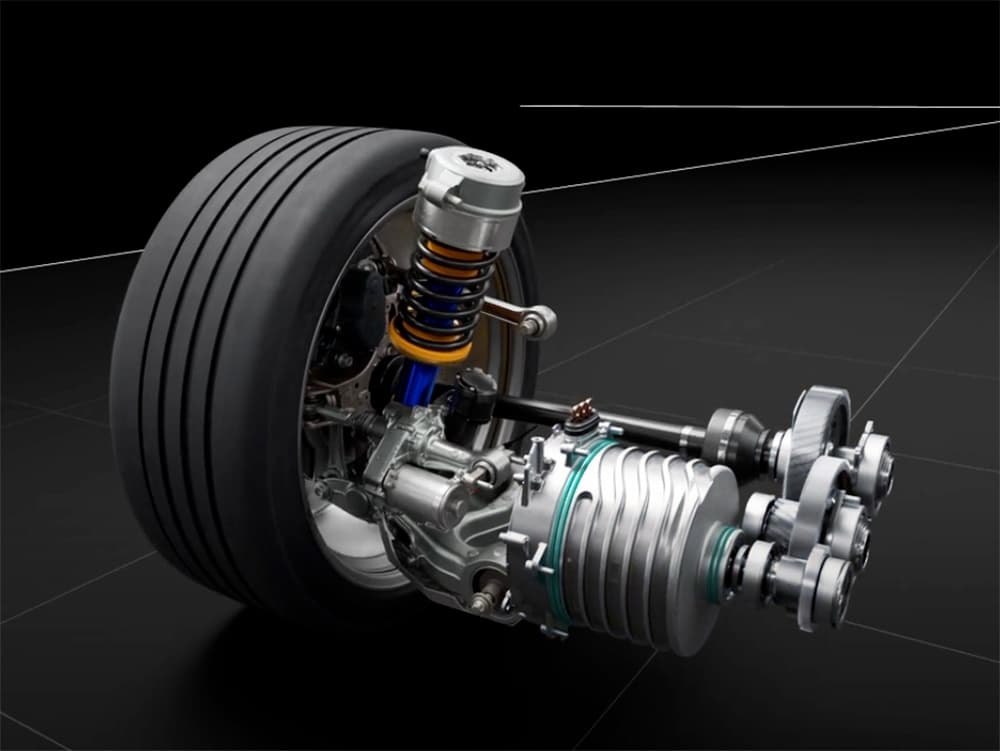
Already with the Ferrari Purosangue and the F80, the Maranello-based marque had introduced an advanced suspension system featuring an active architecture
Lorenzo Pollini · 9/11/2026 · 103 views
What if I told you that, in Maranello, they are working to improve the way we feel a car?
I’m not talking about what we hear, but rather about how the body tends to perceive the car.
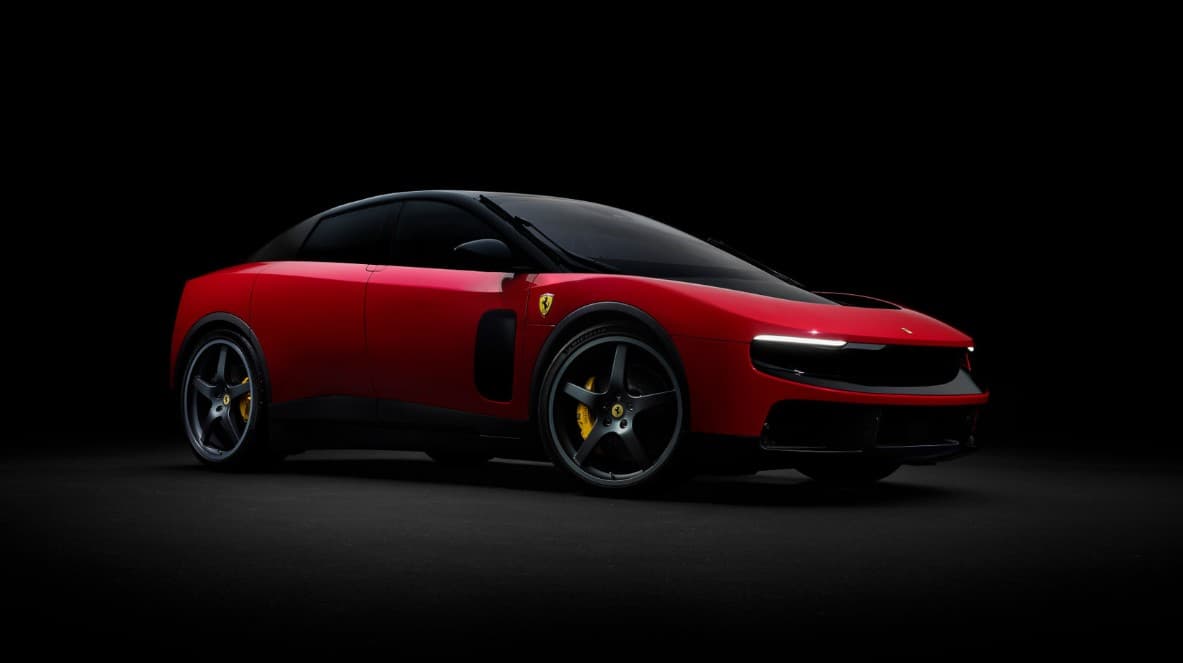
When the first Ferrari electric car, the Luce, was unveiled, the topics that naturally attracted the most attention were its powertrain and design: many of us probably still have nightmares about it - myself included. But I have to admit that, beneath those looks, the Luce might actually be hiding something else rather interesting and innovative.
Let’s start with the fact that most modern cars still use conventional suspension systems, while adaptive or semi-active systems represent a more sophisticated solution. In these cases, the electronics can alter the behaviour of the damper according to the driving conditions. But there is a fundamental difference when compared with an active system: an adaptive damper can alter its damping characteristics, whereas an active actuator is capable of directly generating a force on the suspension system.
Ferrari had already introduced an advanced suspension system with the Ferrari Purosangue and the F80, featuring an
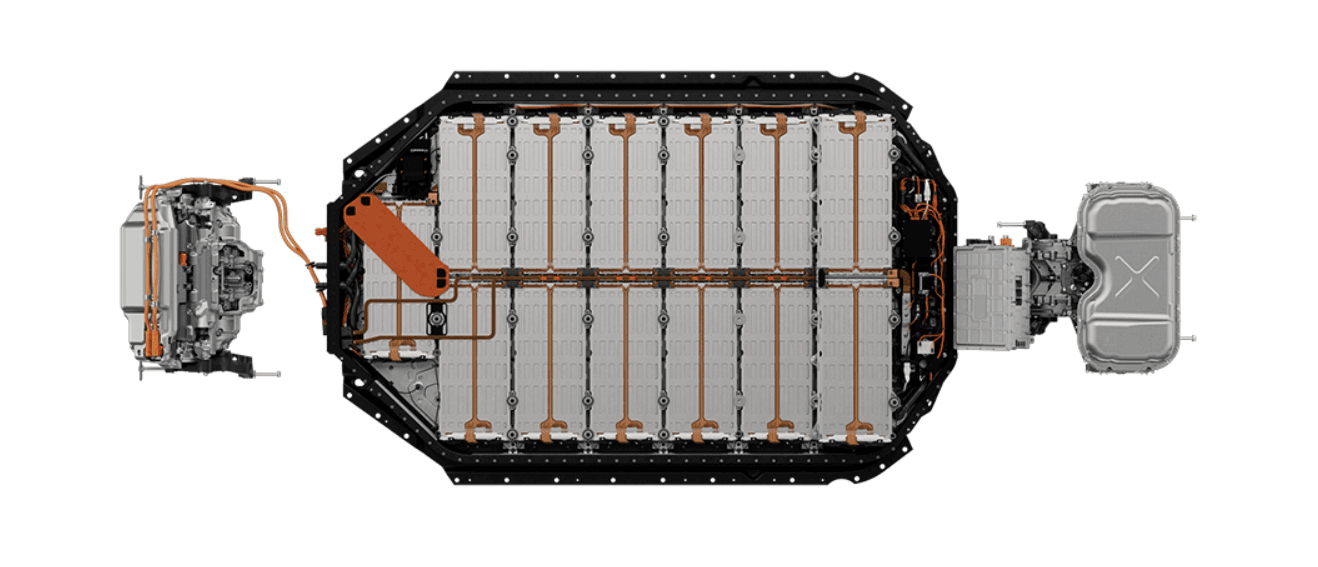
With an electric car, the dynamics involved become even more important. The presence of a large battery inevitably means dealing with high masses, with consequences for the car’s inertia and, above all, for how quickly that mass can be made to change direction or speed. At the same time, regenerative braking can contribute to the car’s deceleration and therefore to the resulting longitudinal load transfers.
In very simple terms, during braking, the vertical load tends to shift towards the front axle, while during acceleration the opposite occurs. In a corner, meanwhile, the load is redistributed between the inner and outer wheels.
Managing these forces therefore becomes essential to keep the tyre in the best possible operating conditions and to control the behaviour of the car. Especially when we are talking about Ferrari and performance.
As a result, the suspension system is no longer called upon simply to absorb road surface imperfections, but can also become a key player in managing how that mass moves.
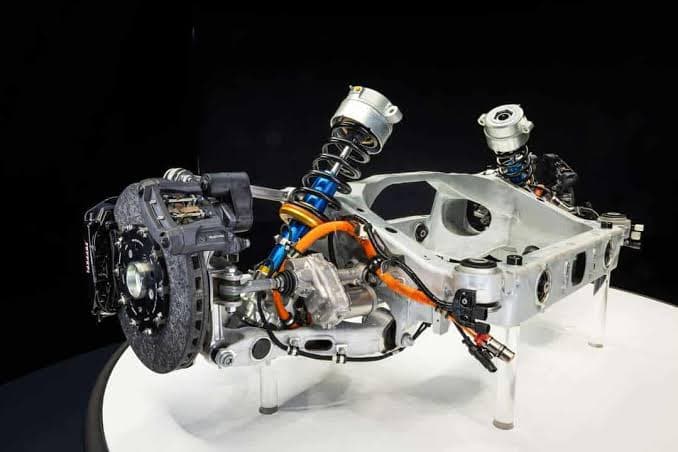
And this is where the new Ferrari Luce’s advanced active suspension comes into play: imagine no longer thinking of a damper as a simple passive component, but as part of a system capable of actively generating forces.
Let me explain.

The system combines electronic control, precision mechanics and an electric motor. Through a mechanical mechanism, the latter can transform the motor’s torque into a force applied directly to the suspension assembly.
In the technology developed by Ferrari and Multimatic, the 48 V electric motor operates through a ball screw, converting rotational motion into linear motion. This means that the actuator does not simply react to forces coming from the road, but can actively contribute to controlling the movement of the sprung masses.
Through this system, it is therefore possible to intervene in roll and pitch movements and, above all, to independently control the vertical forces applied at the four corners of the car.

The point is that, sometimes, the most interesting solutions are not the ones you can see, but the ones working beneath the surface.
And perhaps that is the most interesting aspect of the Ferrari Luce: not stopping at what we can see, but discovering what lies beneath the skin.