The physics of a V12: when mechanics makes noise again | CarDynamics
Cars·News·Insights
The physics of a V12: when mechanics makes noise again
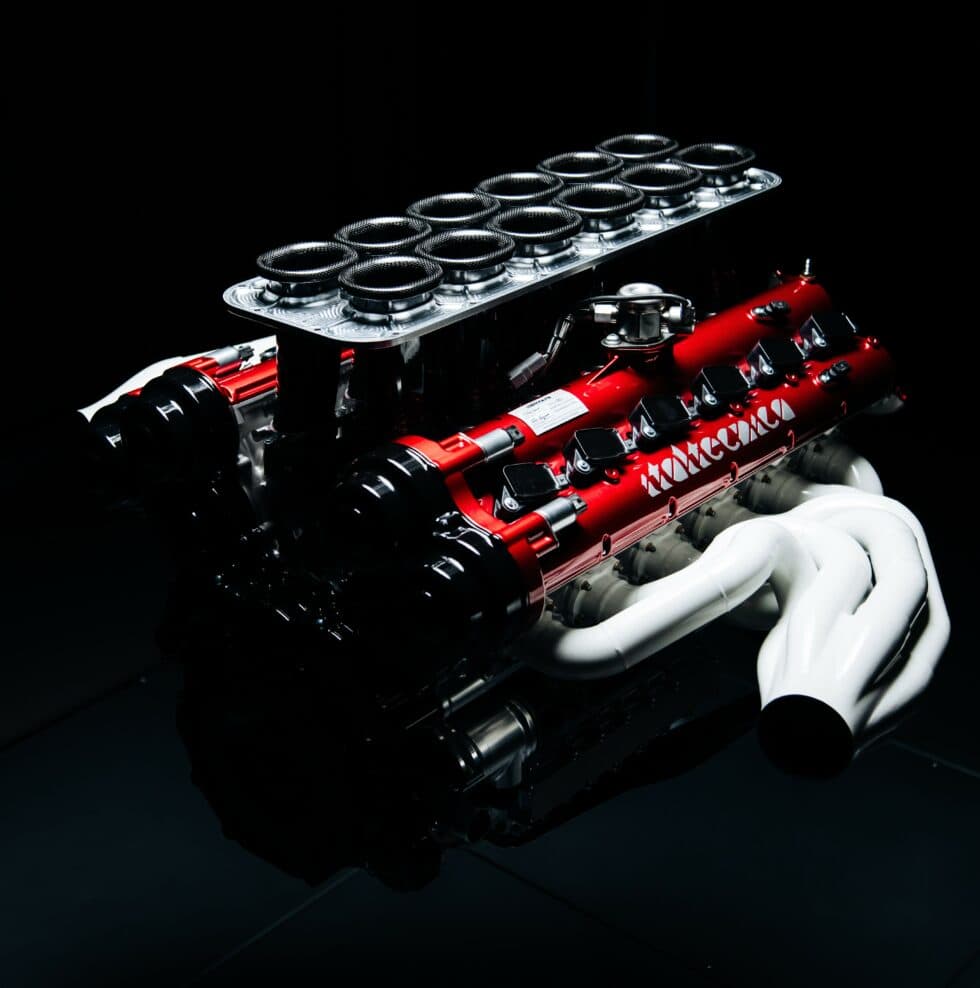
It is called Orion. A naturally aspirated 65-degree V12 displacing 6.8 litres, built around a choice that is anything but obvious today: no forced induction. A choice that, in 2026, almost feels like an act of adolescent defiance: doing exactly what everyone told you not to do
Lorenzo Pollini· October 6, 2026
“The piston is only what we see. Beneath it lies a world of kinematics, fluid dynamics and combustion: the crank mechanism, tumble and swirl motion, the propagation of the flame front. This is where an engine’s character is born.”
These, along with countless other legendary phrases, were the bread and butter of my Internal Combustion Engines lectures at university. I still remember them today with that particular smile suspended somewhere between nostalgia and the realisation that, back then, they seemed like little more than formulas to memorise.
And perhaps that is precisely why it is difficult not to pause for a moment when faced with Italtecnica’s project. In an industry that now talks about charging times, batteries and kilowatt-hours with the same familiarity with which we once leafed through an encyclopaedia looking for an answer, Italtecnica has chosen a seemingly anachronistic path: twelve cylinders, naturally aspirated and 9,200 rpm.
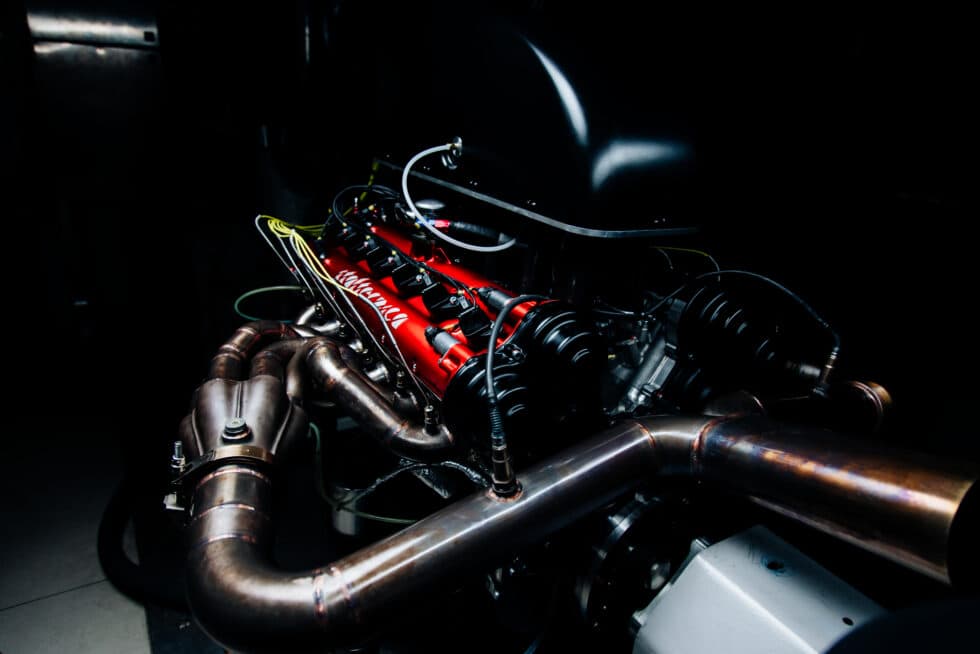
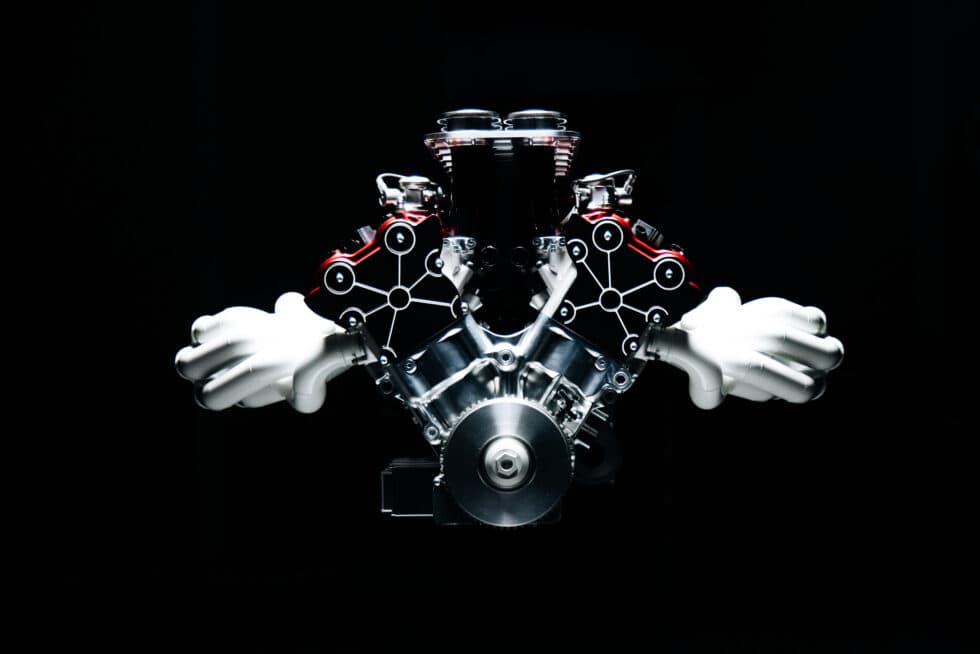
It is called Orion. A naturally aspirated V12 with a 65-degree bank angle, 6.8 litres of displacement and a choice that is anything but obvious today: no forced induction, no shortcuts to extract its power.
A choice that, in 2026, almost feels like an act of adolescent defiance: doing exactly what everyone told you not to do.
The goal, however, is not a nostalgic celebration of the past, nor a childish act of rebellion against the establishment. It is the creation of a
modern, lightweight, high-performance engine
, developed to modern quality standards and manufacturing processes, with a philosophy that is remarkably close to motorsport.
But why build a large naturally aspirated V12 today?
Technically speaking, the answer lies entirely within the project itself.
Let’s start with weight, because it is probably the figure that surprises most: less than 200 kg, including the complete engine with its intake and exhaust systems. For a V12 of this displacement, that is far from an insignificant figure and says a great deal about its design philosophy. Aluminium, titanium and carbon fibre are used wherever they can help keep mass under control, while the crankcase and lower crankcase structure are machined from solid.
But low weight alone would not be enough. An engine like this also needs to breathe properly.
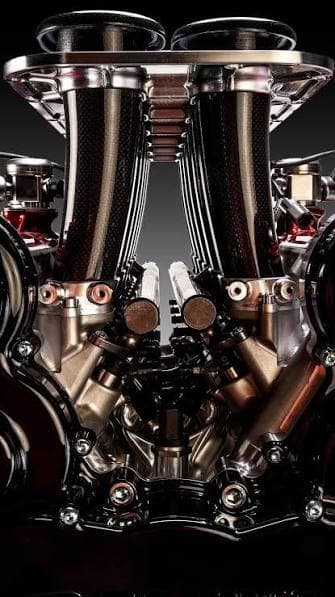
And this is where those words that once seemed like abstract formulas, useful mainly for passing an exam, come back to mind: fluid dynamics, resonance, pressure waves. In a naturally aspirated engine, air does not simply enter because the piston moves downwards. The intake runners become an integral part of the engine’s design, as in Italtecnica’s case, exploiting phenomena such as Helmholtz resonance and the RAM effect — the combined effect of airflow velocity, inertia and intake geometry. The ultimate goal is to maximise cylinder filling by relying on physics alone, without the need for a turbocharger.
It is a fundamentally different philosophy from that of a forced-induction engine.
850 hp in road-going specification, accompanied by more than 750 Nm of torque. The rev limiter arrives at 9,200 rpm. Numbers that, in themselves, would be enough to make any powerplant interesting.
But Italtecnica has also developed a Track Day version capable of exceeding 900 hp at 9,500 rpm, with more than 800 Nm and a maximum engine speed of 10,200 rpm.
Orion uses a gear-driven timing system, twin overhead camshafts per bank and four valves per cylinder, with titanium valves and variable valve timing on both the intake and exhaust sides. Beneath it all, a dry-sump system with an eight-stage oil pump ensures lubrication even under the most demanding conditions.
Behind the project stands an important name: Claudio Lombardi. A figure who needs little introduction to anyone familiar with the history of Italian automotive engineering, from Ferrari Formula 1 to Lancia rallying. His experience feeds into a project that, rather than simply chasing a headline power figure, seems intent on bringing back an increasingly rare concept: an engine in which mechanical engineering itself remains an integral part of ultimate performance.
It is not nostalgia. Or at least, not nostalgia alone.
Orion does not attempt to recreate the past. Instead, it retains some of its fundamental principles and carries them into the present through modern materials, electronics, simulation and manufacturing processes.
Words we thought we had left behind in the university lecture hall suddenly take on a different meaning. Concepts such as flow through intake runners, pressure losses, turbulence and flame-front propagation are no longer simply chapters in an exam syllabus. They are protagonists once again.
And perhaps, in 2026, there is no more elegant act of defiance than this.