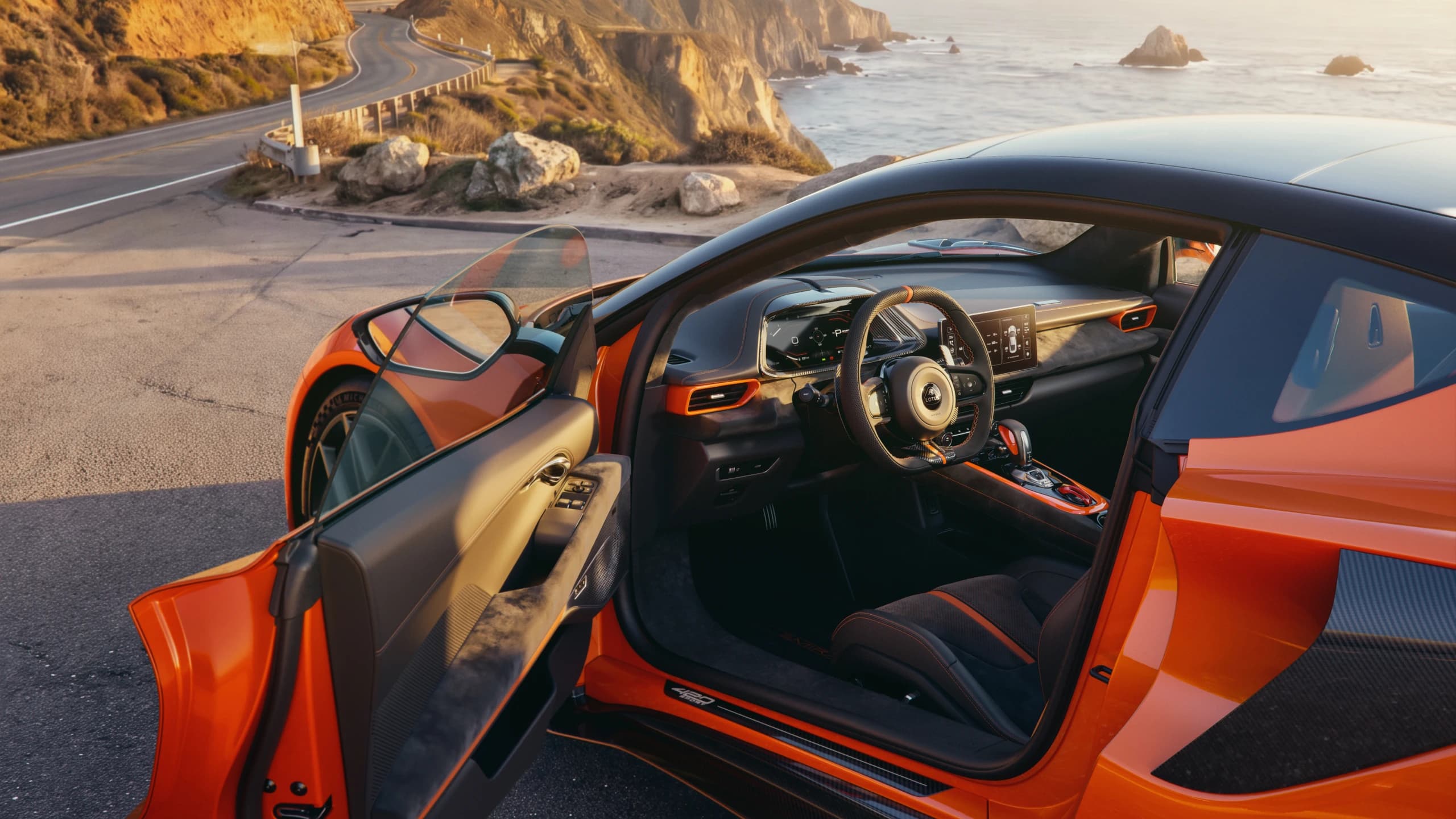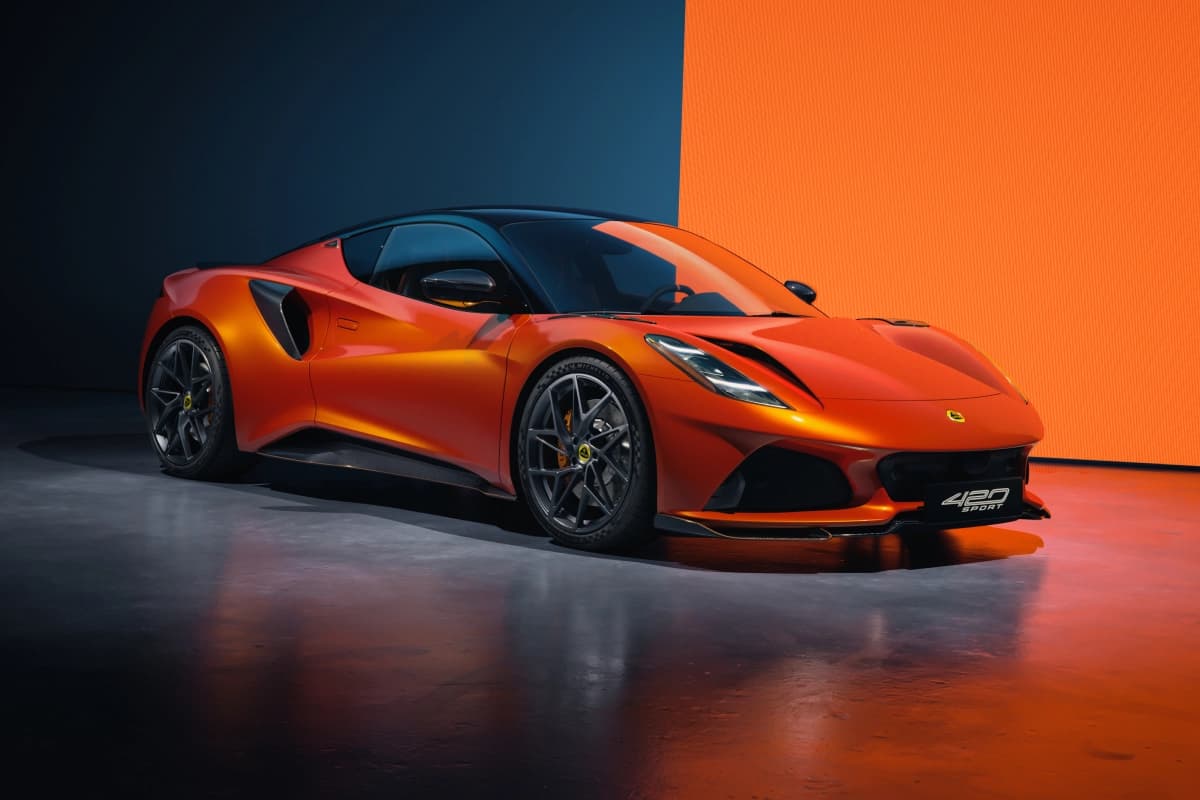
As the British marque looks towards electrification, the 420 Sport carries its legacy forward with a formula that still puts driving pleasure at its heart
Lorenzo Pollini· October 19, 2026
1 / 6There are still cars that remind us why we fell in love with the automotive world, and the Lotus Emira is very much one of them. A sports car built around the relationship between car and driver, embodying a philosophy that has made lightness and dynamic precision its defining principles. Today, as the British marque looks towards electrification, the 420 Sport carries that legacy forward with a formula that still puts driving pleasure at its heart.
This particular version of the Emira takes that philosophy a step further, with targeted changes to weight, chassis setup and aerodynamics. Horsepower may impress on paper, but it is the way a car responds when the road becomes a ribbon of bends that truly reveals its character.
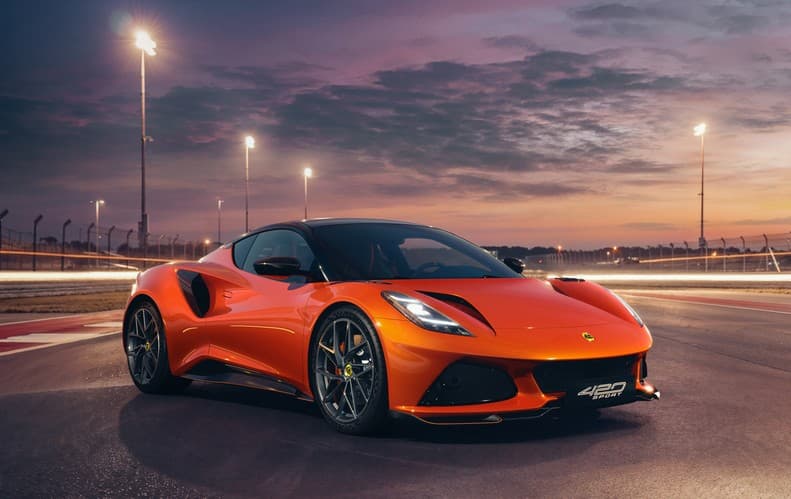
Under the bonnet sits a 2.0-litre turbocharged four-cylinder engine producing 420 PS and 500 Nm, paired with an eight-speed dual-clutch transmission that sends power to the rear wheels. A claimed 0–62 mph time of 3.9 seconds, a 0–124 mph time of 12.47 seconds and a top speed of 186 mph point to seriously impressive performance. But the Emira is about more than its engine. It starts with the Lotus Sports Car Architecture: an extruded and bonded aluminium chassis, following a construction philosophy that recalls the one introduced with the Elise. Its claimed torsional rigidity of 26,300 Nm/° is more than just a figure on a spec sheet. A structure that flexes less under load allows the suspension to work with greater precision, reducing the variables introduced by chassis flex.
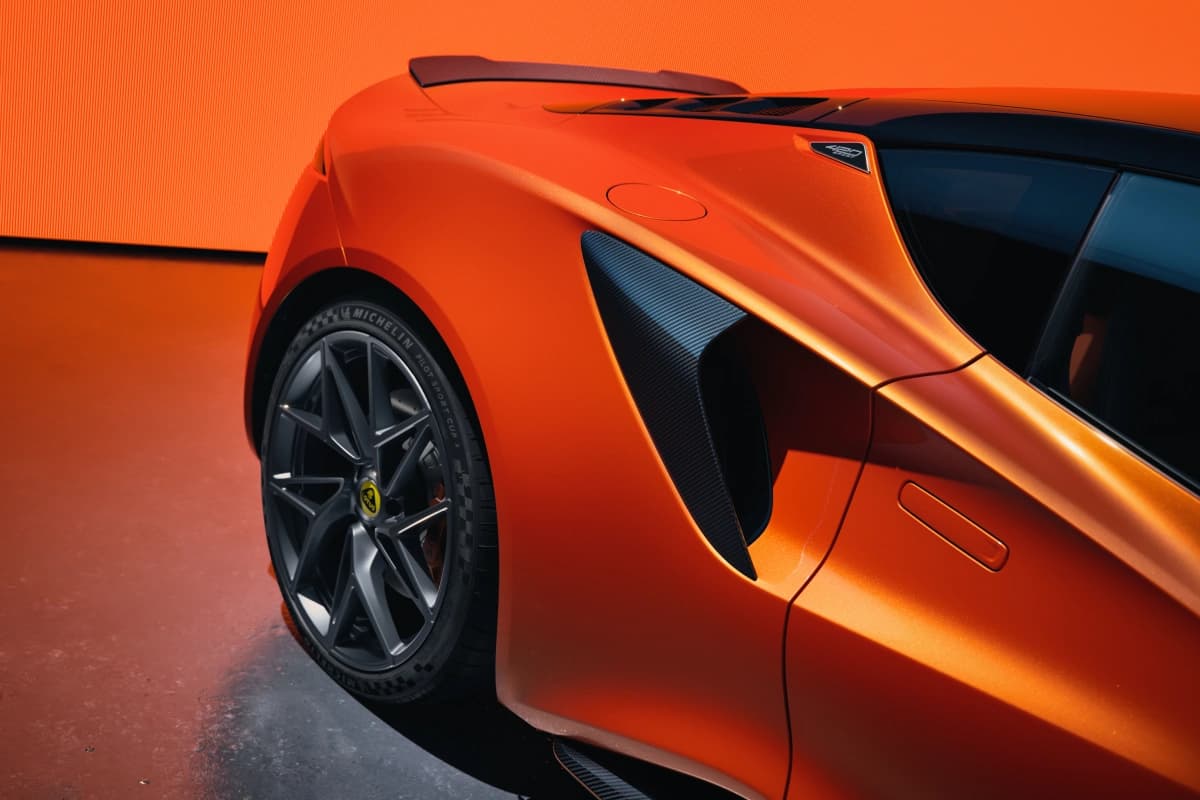
It is like wielding an exceptionally sharp Japanese knife on a chopping board that bends with every stroke: the blade can only do so much if the surface beneath it cannot provide a stable foundation.
On this platform, Lotus uses double-wishbone suspension at both the front and rear, with forged aluminium components. This layout allows precise control over wheel geometry as the suspension moves, helping keep the tyres in the most effective position relative to the road. The benefits extend beyond steering precision, contributing to more consistent behaviour during weight transfers, sustained cornering and rapid changes of direction.

The chassis setup has also been revised, with ride height reduced by 5 mm. The Lightweight Handling Package adds adjustable Multimatic DSSV dampers, a titanium exhaust, a lithium-ion battery and a carbon-fibre rear tailgate, delivering a claimed weight saving of up to 25 kg. That might not sound like much, until you ask those kilos to change direction.
Aerodynamics have also been refined. With the Lightweight Handling Package, Lotus claims up to 25 kg of additional downforce compared with the Emira Turbo used as the reference model. It completes the technical package, although the figure needs to be considered in the context of the conditions under which that downforce is generated.
In Italy, prices start at around €133,500: a substantial sum for a sports car that seems to belong to another era, even as the industry changes direction. In a market increasingly focused on displays and digital features, the Emira 420 Sport champions a different idea of progress. Not because technology is the problem, but because in a sports car it should be the means, not the end. And if this really is one of the last expressions of Lotus's traditional philosophy, it is worth asking what we stand to lose.