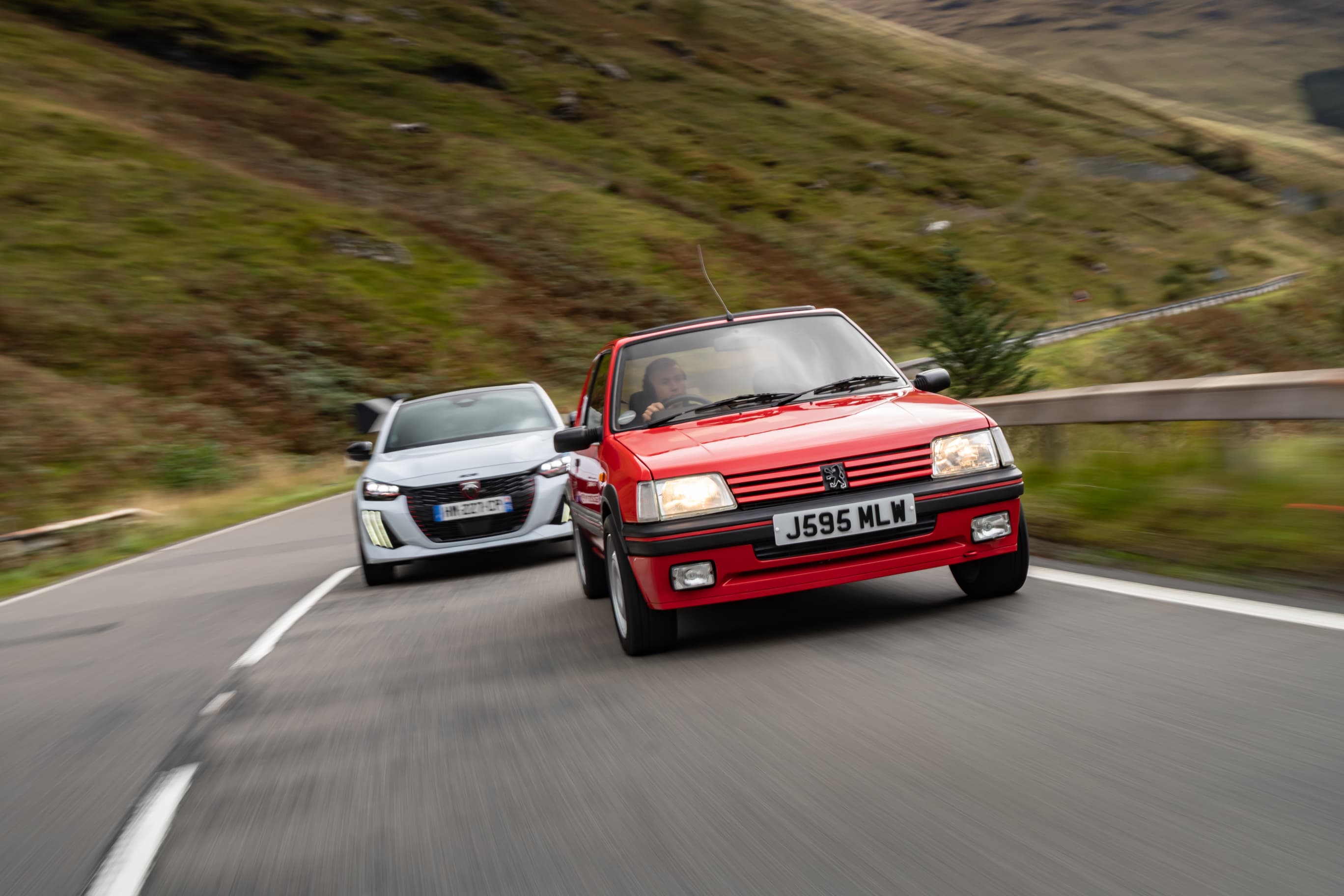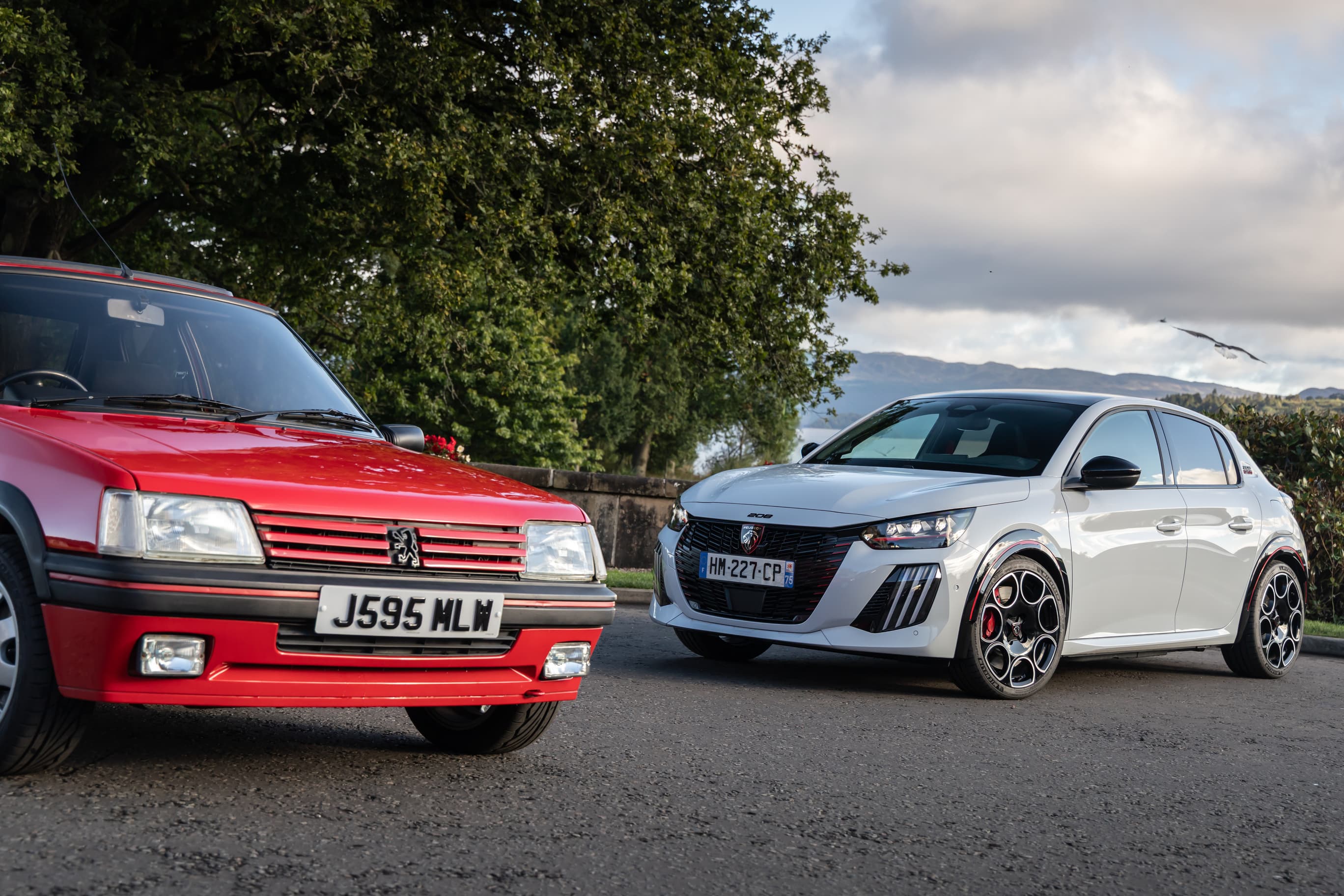
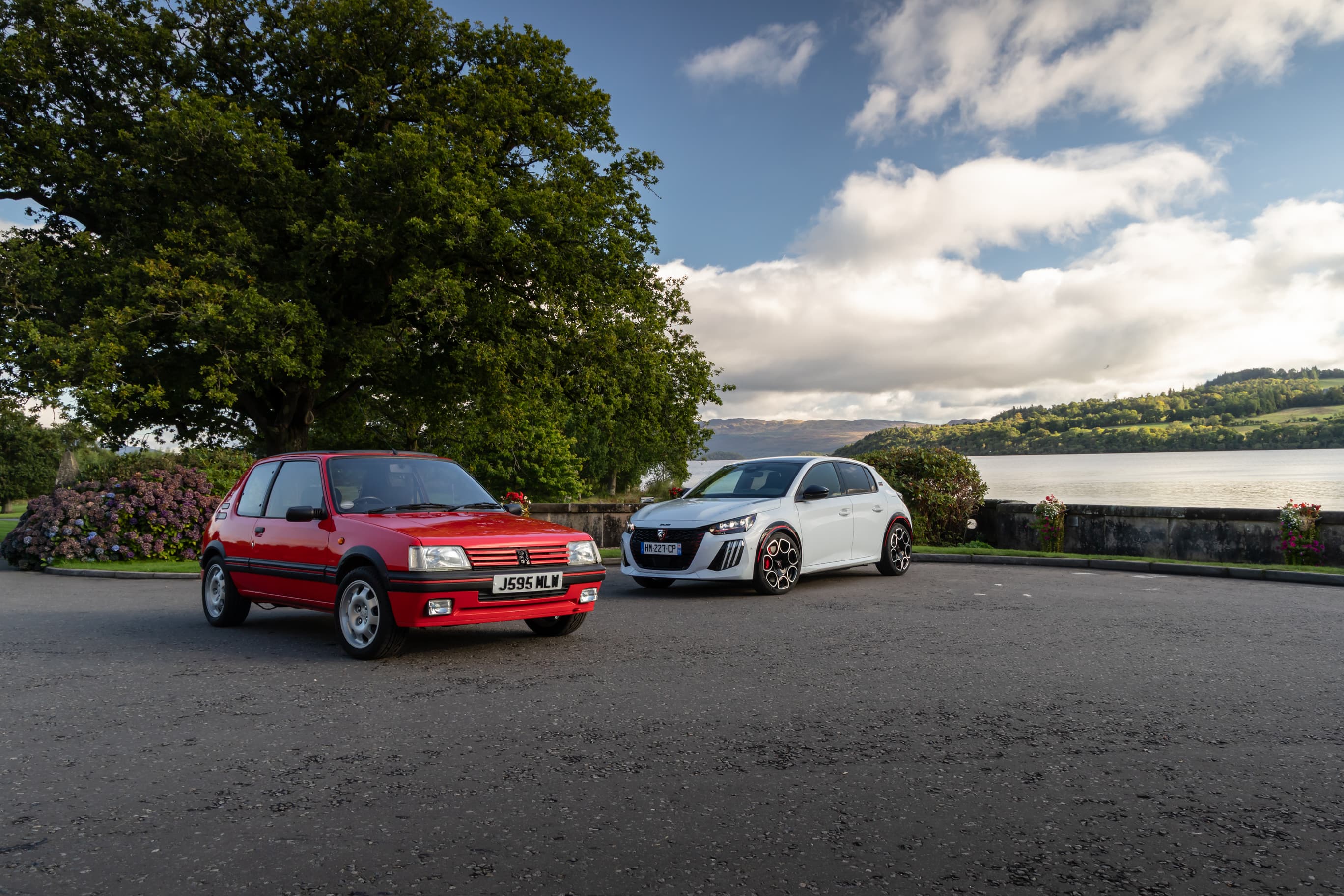
From the petrol-powered 205 GTi to the battery-powered E-208, Peugeot electrifies one of the most iconic badges in the hot-hatch world, delivering 281 hp and a 0–100 km/h time of 5,5 seconds
Lorenzo Pollini· October 23, 2026
1 / 4There are three letters at Peugeot that carry far more weight than their size on the tailgate would suggest. GTi. A badge that evokes lightness, agility and the kind of driving pleasure that doesn't necessarily require supercar levels of power to leave a lasting impression. Applying it to an electric car raises a far from trivial question: can a small sports car retain its character when the pace is dictated by battery SoC, software and thermal management? The new Peugeot E-208 GTi attempts to answer that question with more substantial arguments than a simple exercise in nostalgia.
Beneath its compact bodywork sits an electric motor delivering 281 hp and 345 Nm, enough to propel the car from 0 to 100 km/h in 5.5 seconds. But in the electric era, blistering acceleration is no longer a surprise. The real test is whether it can be repeated without performance briefly fading as the battery heats up, the state of charge drops and the electronics step in to protect the system.
This is where Peugeot Sport has stepped in. Its engineers have worked on the motor's electronic management and, above all, on the cooling system for the 54 kWh battery, of which 51 kWh is usable capacity. Coolant circulation is adjusted according to temperature and power demand, with the stated aim of limiting derating — the reduction in performance designed to protect the system. It may be a less eye-catching detail than a 0–100 km/h time, but it matters far more to anyone imagining a mountain pass tackled entirely in Sport mode. How consistently the car can deliver under the most demanding conditions remains to be seen on the road. After all, there is a world of difference between a claimed performance figure and one that can be repeated: much like the difference between feeling unsinkable and meeting an iceberg.
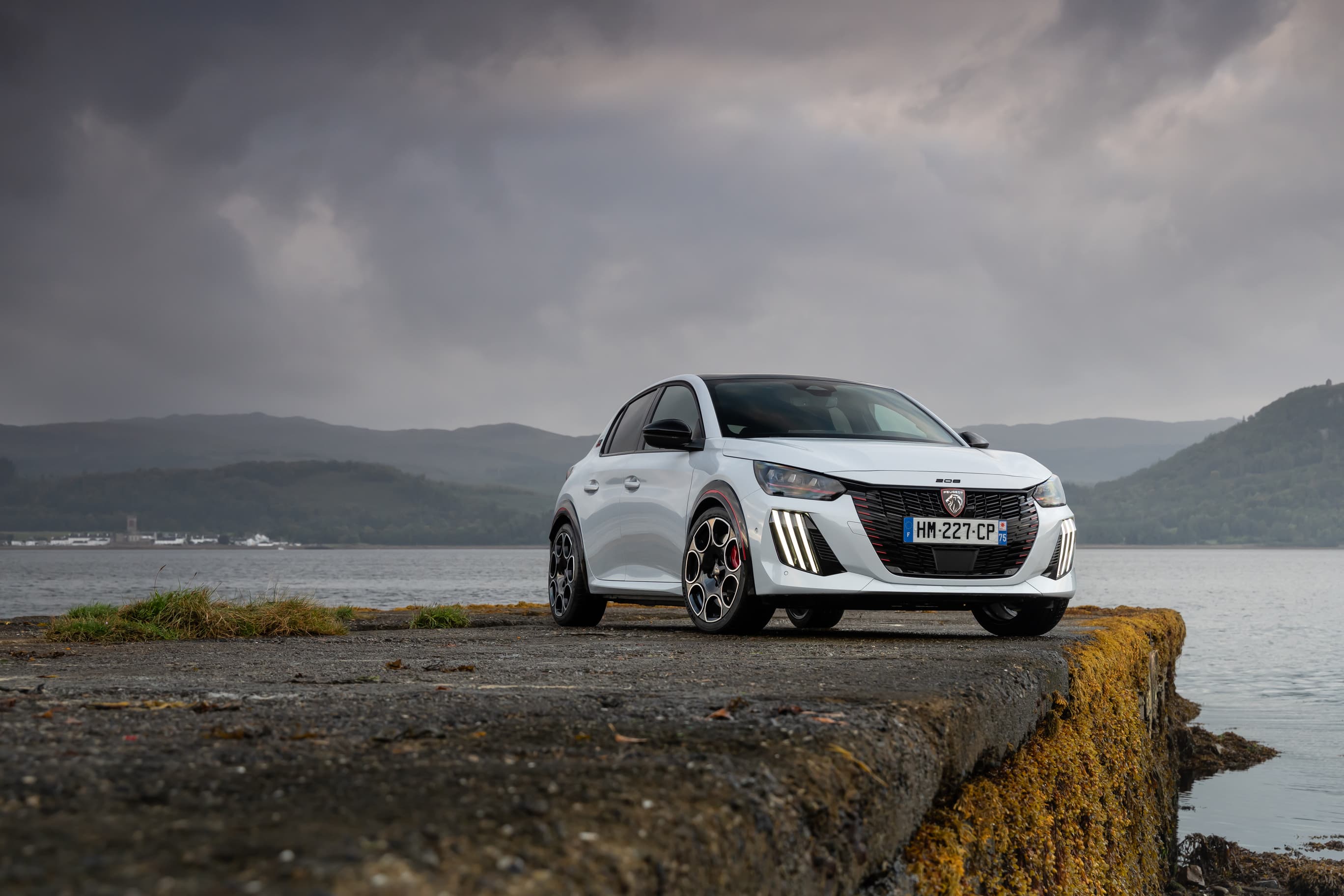
Back to our little baguette: even its shape hints at a more sporting character. The body sits 25 mm lower, while the track has been widened by 56 mm at the front and 28 mm at the rear. A 31 mm rear anti-roll bar works alongside dedicated springs and dampers. The real headline, however, is the mechanical limited-slip differential integrated into the transmission — a technical solution designed to make better use of the 345 Nm delivered to the front wheels, particularly when grip starts to fade. Up front, there are also 355 mm brake discs with fixed four-piston calipers. The rear, by contrast, retains the standard E-208 brakes, raising questions about the overall balance of the braking system that will need to be answered during a dynamic test.
Sport mode disables regenerative braking, allowing the driver to focus on driving without energy recovery intervening on the overrun. It is a setting that fits the car's stated intentions, although the overall calibration of the steering, accelerator and electronic controls will ultimately determine whether this GTi can genuinely engage its driver or turns out to be just another microwave on wheels, like so many others.
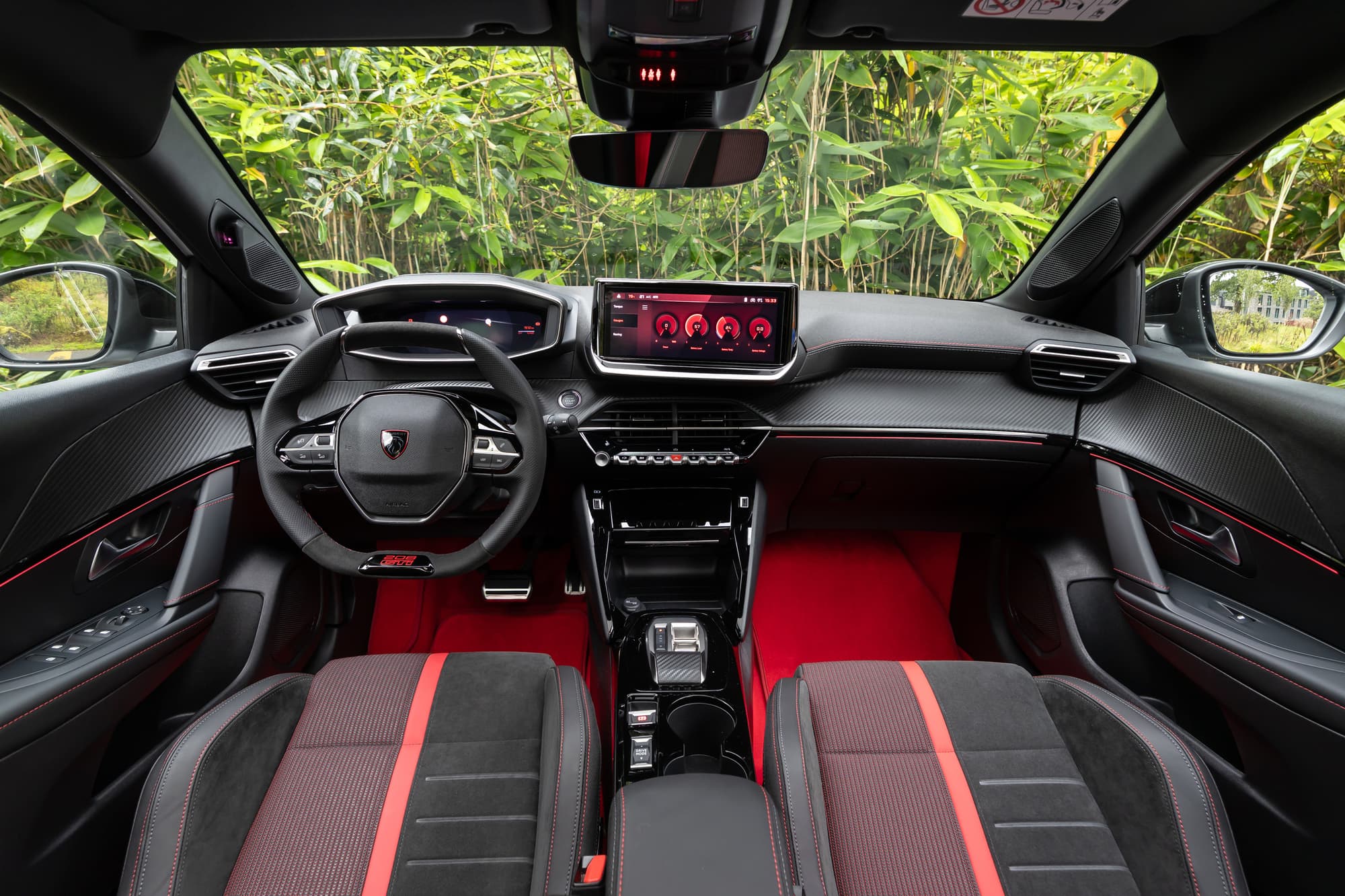
Styling-wise, Peugeot has avoided turning the 208 into a caricature of a track car. There are 18-inch wheels inspired by the original 205 GTi, wider tracks, red accents and an interior that pays tribute to its predecessor with dedicated seat belts, upholstery and stitching. The connection with the past is unmistakable, but a few red inserts are not enough to inherit forty years of reputation.

Then there is the trade-off in range, which depends on which tyres the car wears. Peugeot claims up to 375 km on the WLTP cycle with the optional Hankook Ventus S1 Evo3 tyres, while the figure drops to 352 km on the standard Michelin Pilot Sport 4S tyres. A 20–80% rapid charge takes less than 30 minutes at 100 kW; using a 7.4 kW wallbox, a full charge takes 4 hours and 40 minutes. So you can sleep easy.
The E-208 GTi appears to have the technical credentials to earn the name it carries. But there is still a gap between a convincing specification sheet and a truly memorable sports car — one that no press release can bridge. A true GTi is not measured solely in horsepower, seconds or millimetres, but in how much it makes the driver smile. Getting behind the wheel remains the ultimate test.